All guidesMixing and masteringMix readiness
Mixing vs mastering: the difference.
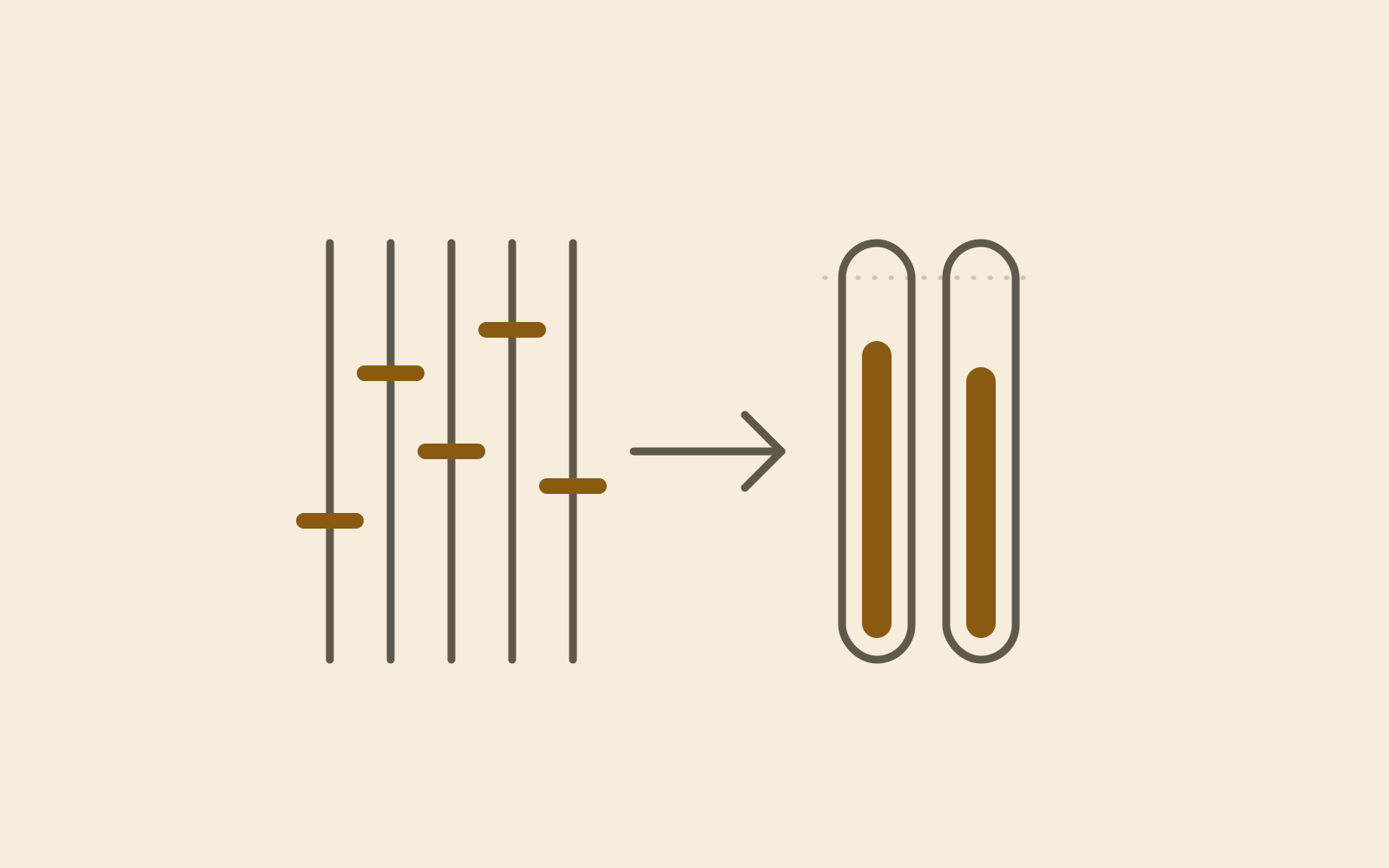
Mixing turns many recorded tracks into one stereo mix. Mastering takes that finished mix and prepares it for release: the last adjustments to tone and level, and the checks a release needs.
On this page
What is mastering?
The Recording Academy’s Producers & Engineers Wing defines the mastering engineer as “the last creative bridge between the mix process and the distribution process”, who “generally works with a final mix of a project and makes final adjustments to the sound before distribution while maintaining the vision of the artist, producer and label” (Recording Academy engineer definitions).
Apple’s mastering guide puts the tools in one sentence: “The main tools used in mastering—equalization, compression, limiting, or combinations of these—are all different ways of controlling aspects of volume. Making decisions about gain levels, dynamic range, and frequency response is what mastering is all about” (Apple Digital Masters).
Abbey Road adds the part people forget: mastering engineers “act as the final quality control”, and what they do “can vary from doing almost nothing (because the mix is already great), to making adjustments to the sound of every track” (Abbey Road).
What is the difference between mixing and mastering?
Abbey Road states it plainly: “While the mixing process tends to deal with multiple tracks, with each one individually optimised, mastering engineers will work with the mix once everything has been combined into a single stereo file” (Abbey Road).
Scrolls sideways
| Category | Mixing | Mastering |
|---|---|---|
| Works on | The separate tracks: vocals, drums, bass, every part | One stereo file per song |
| Can move one instrument | Yes, on its own | Only by moving everything that shares those frequencies |
| Typical tools | Level, panning, EQ, compression, effects, automation | EQ, compression, limiting, level between songs |
| Ends with | The approved stereo mix | The files a release is delivered from |
iZotope: “Mixing and mastering engineers often deploy stereo bus processing on the song as a whole to get the effects they desire. But this doesn’t mean mastering and mixing are in any way the same” (iZotope).
Drawn from the table above
Ask both stages for more vocal.
Mixing
Works on the separate tracks
- Vocals
- Drums
- Bass
- Guitars
- Keys
- Every other part
Ends with the approved stereo mix
Mastering
Works on one stereo file per song
Ends with the files a release is delivered from
Press it to see what each stage can move.
What does mastering actually do?
- Tone and dynamics. Abbey Road: the techniques “might include equalisation (EQ), compression and/or limiting”. Sound On Sound’s Sam Inglis describes the scale of it: “Quite often they don’t even use EQ or compression, and when they do, they’re applying half a dB here and half a dB there” (Sound On Sound).
- Level, and the space between songs. Abbey Road: “Adjusting levels, pauses between tracks and fade-ins/outs are also part of the mastering process”.
- Clean-up. iZotope: mixing engineers “might not catch random ticks, pops, plosives, distortions, or spectral anomalies. A mastering engineer is expected to do this”.
- Bit depth and dither. iZotope: dither is used “when it is necessary to convert higher word-length recordings (e.g. 24 or 32 bit) to lower bit depths (e.g. 16 bit for CD)” (iZotope).
- Metadata. iZotope: “ISRC numbers, UPN codes, song titles, artist information, all of it must be collated and imbued into the file, usually handled by the mastering engineer”.
- A last check. Abbey Road, above: the final quality control before release.
Stereo widening in mastering is contested. Some tools widen the stereo image in mastering; Sam Inglis says the engineers he knows “don’t use stereo image wideners, matching equalisers, exciters, microphone modellers or tape emulators”. Read a width control as a choice someone has to defend, not a standard step.
What can mastering not fix?
The mastering engineer Ray Staff, on trying to correct one part of a finished mix: “Every time I try to tackle an individual instrument it’s a compromise, because the whole mix is affected” (Sound On Sound). Universal Audio puts the boundary the same way: “mastering does not deal with track levels, panning or other aspects of individual tracks in a mix” (Universal Audio).
Sound On Sound’s Alexander Wright: “Remember that mastering is the final polish, not a remix. If something feels fundamentally off, ask if it might be a mix problem in need of revision” (Sound On Sound). Our pre-master checklist is the list of problems worth fixing in the mix first.
Can I mix and master at the same time?
You can, and plenty of people do. The argument against it is distance rather than technique. Bob Katz: “For optimum results, mastering should not be performed in the same studio as the recording or with the same engineer who recorded the work” (Digital Domain). If you master your own mix, at least separate the two in time, and check the result somewhere other than the room you mixed in.
What does automatic mastering do, and where does it stop?
The automatic chain in Bounce Sessions works on one stereo mix at a time. It measures the mix, sets its tone from the mix’s own balance plus one small curve, brings it to the loudness you choose under a −1.0 dBTP ceiling (or −0.1 if you choose it), and measures the file it delivers (how the chain works). It does not sequence an album, set the gaps between songs, remove clicks, write ISRCs, or tell you a mix needs revisiting.
The honest counterpoint is worth reading in full. Sam Inglis, asked whether mastering plug-ins and automatic services can replace a mastering engineer, answers: “The short answer to that question is ‘no’”, and describes a human engineer as “a fresh pair of ears who can listen to your music on a really good reference monitoring system, identify potential problems with it, and help you get your project ready for release”. If that is what your record needs, personal mastering is the path; if you want a finished, measured file in minutes, the automatic one is.
Hear what the automatic chain does to your own mix, against the original, at full length.
Master a track, freeSources quoted on this page
Every outside document this guide links to, in the order it first appears.
- Recording Academy engineer definitionsgrammy.com
- Apple Digital Mastersapple.com
- Abbey Roadabbeyroad.com
- Abbey Roadabbeyroad.com
- iZotopeizotope.com
- Sound On Soundsoundonsound.com
- iZotopeizotope.com
- Sound On Soundsoundonsound.com
- Universal Audiouaudio.com
- Sound On Soundsoundonsound.com
- Digital Domaindigido.com